
Jun 18, 20268 min read
10 of the best beaches in England{
"url": "best-places-for-tudor-architecture-england",
"destination": "England",
"title": "england",
"country": "England",
"region": "Western-Europe",
"continent": "Europe",
"refresh": 30,
"refresh_limit": 3
} Lonely Planet may earn a commission from affiliate links on our site. All recommendations and reviews reflect our own independent opinions.
England’s Tudor era may have been short by historical standards, but it was an age of transformation. The dynasty that began with Henry VII’s victory at Bosworth in 1485 and ended with the 1603 death of Elizabeth I took England from medieval kingdom to early modern power.
The break with Rome under Henry VIII didn’t just reshape faith; it dissolved monasteries, redistributed land and shifted power into private hands, fueling a new class of wealthy landowners. Expanding trade routes and rising prosperity changed how people lived and built, with once-rare brick becoming a marker of status and permanence. Architecture followed suit, moving away from defensive forms towards homes designed for display, comfort and visibility.
Tudor architecture sits at a turning point, between Gothic and Renaissance. You still see it in the half-timbered houses, steep roofs and tall chimneys. The black-and-white façades weren’t just structural; they were meant to stand out.
Walk through Tudor England today, and it feels like an exploration of a landscape shaped by ambition, belief and a quiet show of power.
{
  "url": "best-places-for-tudor-architecture-england",
  "destination": "England",
  "title": "england",
  "country": "England",
  "region": "Western-Europe",
  "continent": "Europe",
  "refresh": 30,
  "refresh_limit": 3
} 
Best for Tudor power
Start at Hampton Court Palace, set by the Thames in southwest London. Built by Cardinal Wolsey and expanded by Henry VIII, the palace is a masterclass in red brick, symmetry and controlled excess. At its heart stands the Great Hall, which served as a commissary for lower-ranking members of the royal household and servants. The timber-framed hammerbeam roof is dotted with “eavesdroppers”, carved and painted heads that seem to listen in. Explore the Abraham tapestries and Anne Boleyn’s coat-of-arms, along with Henry VIII's Kitchens, the largest and busiest kitchens in Tudor England. They accommodated 200 cooks, sergeants, grooms and pages, who served over 800 meals a day for the King’s hungry household, burning through 1.3 million logs every year. The Cumberland Art Gallery has masterpieces by Rembrandt, Caravaggio and van Dyck.
Closer to the city center, St James’s Palace was built by Henry VIII as a smaller, alternative residence to the Palace of Whitehall between 1531 and 1536. Much of the original structure has survived, including the Chapel Royal, the gatehouse, some turrets and two Tudor rooms. Still a working royal residence, the palace is best appreciated from the outside. However, the Royal Collection Trust sometimes runs guided tours.
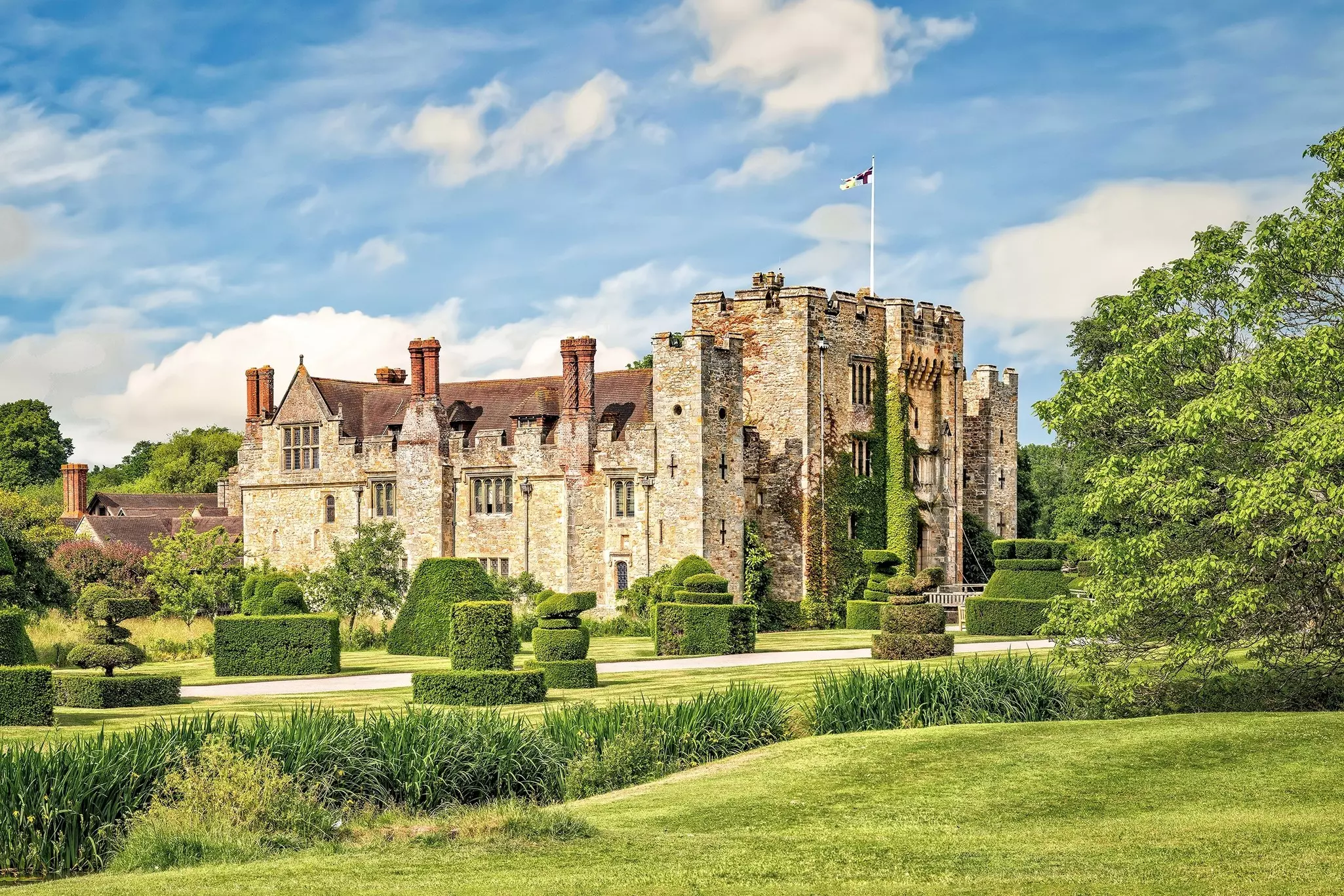
Around 40 miles to the southeast in Kent, Hever Castle, which dates to the 14th century, was once the childhood home of Henry VIII’s second wife, Anne Boleyn. Inside, two of her prayer books offer an intimate glimpse at the life of a woman often reduced to a bit-part in political history. They reflect the personal faith at the heart of England’s religious upheaval, and, ultimately, the tensions that contributed to her downfall and execution in 1536.
Planning tip:Combine Hampton Court with a Thames-side walk or boat trip; arriving by river gives a real sense of how courtiers once moved between royal worlds. Make time to find your way out of Hampton Court Palace Maze, the UK's oldest surviving hedge maze, commissioned around 1700 by William III.
Best for a glimpse of every day Tudor life
Head north-west to Stratford-upon-Avon, a market town in the West Midlands that goes back 800 years, to understand Tudor England beyond palaces. William Shakespeare may dominate, but the town also houses a treasure of Tudor buildings.
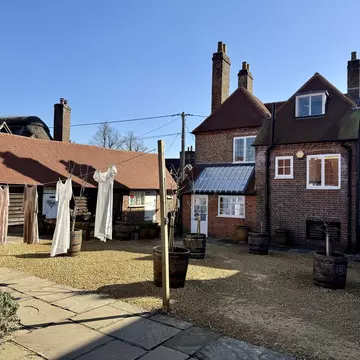
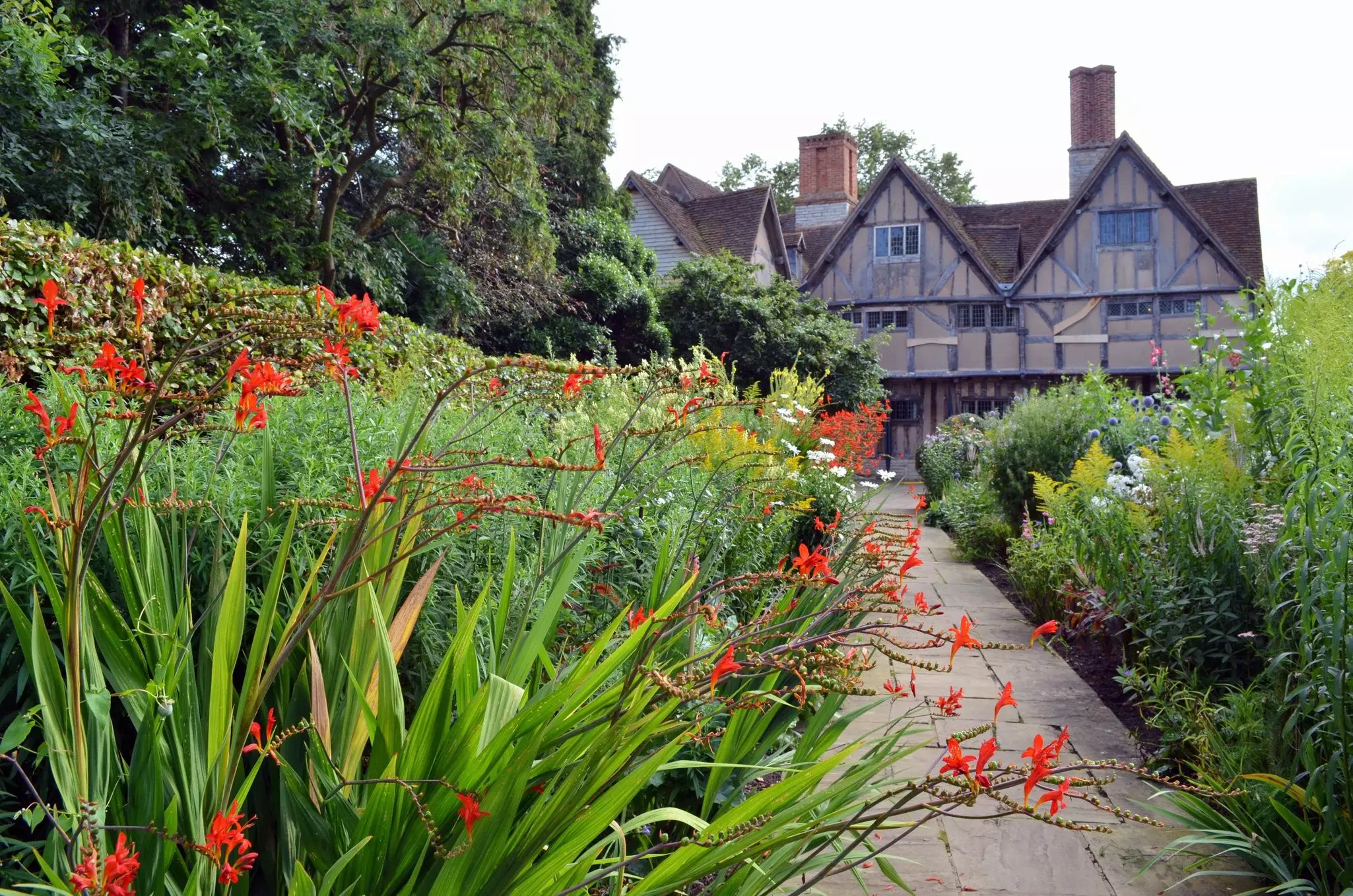
These include Shakespeare’s Birthplace, the bard’s childhood home; Mary Arden’s Farm, the childhood home of his mother in Wilmcote; Hall’s Croft, home to his daughter; and Anne Hathaway’s Cottage, the family home of the bard’s wife-to-be (in Shottery). All showcase the same elements: exposed timber framework (filled with brick, plaster or wattle-and-daub), an overhanging upper story and small-paned windows.
About 9 miles away, Lord Leycester Hospital is one of the best preserved examples of medieval courtyard architecture in England. Explore the 12th-century St James Chapel, the 14th-century Guildhall and the medieval oak-roofed Great Hall.
Planning tip: Visit midweek as Stratford’s popularity peaks on weekends. Explore Tudor World, a living history museum located in a 16th-century building to see what life was like in the time of Henry VIII.
{
  "url": "best-places-for-tudor-architecture-england",
  "destination": "England",
  "title": "england",
  "country": "England",
  "region": "Western-Europe",
  "continent": "Europe",
  "refresh": 30,
  "refresh_limit": 3
} Best for timber-framed beauty and mercantile wealth
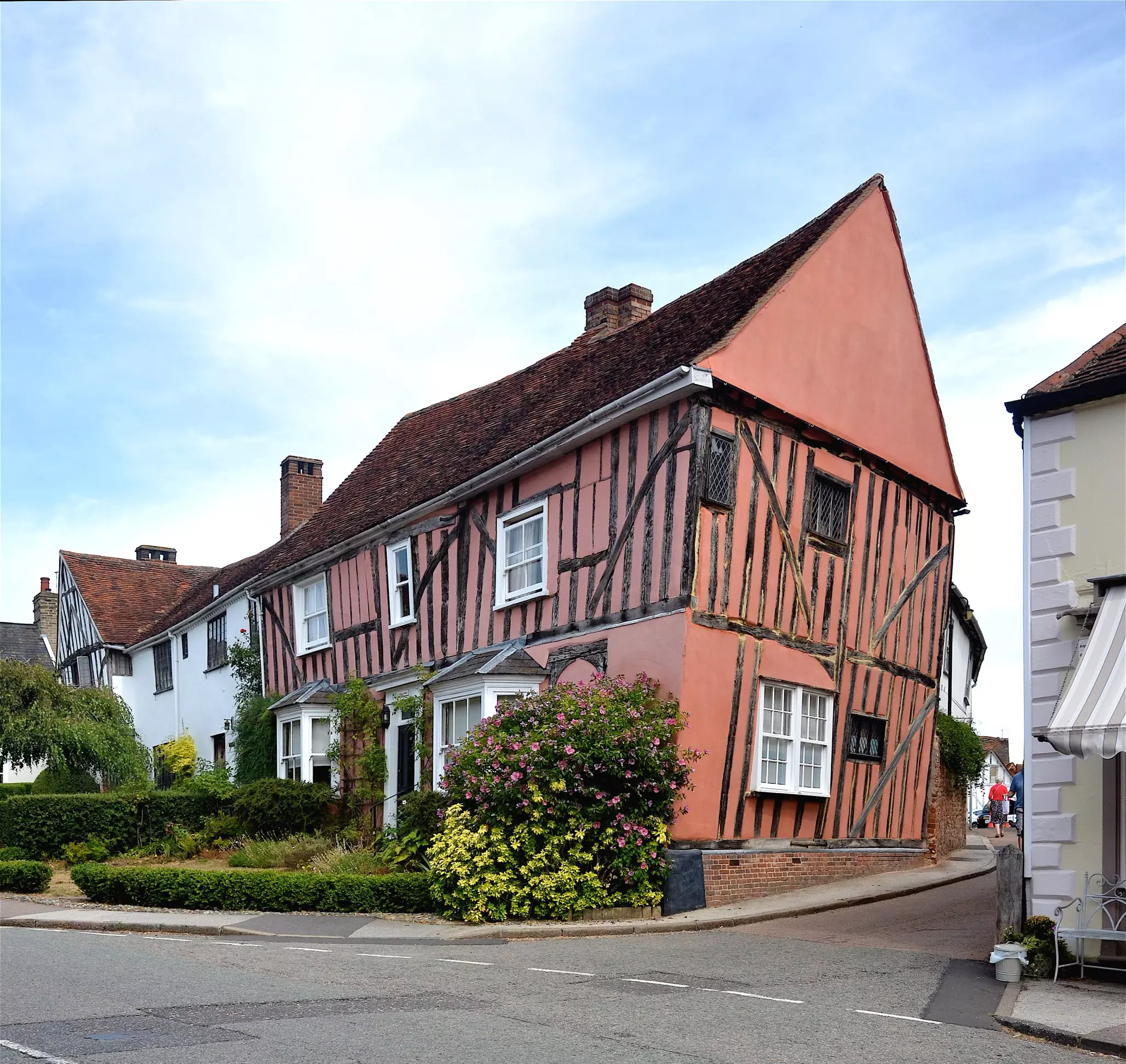
East Anglia’s wealth during the Tudor period came from wool, and it’s showcased in Lavenham. One of England’s best-preserved medieval towns, its crooked, half-timbered houses are nestled in the midst of the Suffolk countryside. The architecture, plaster panels painted in ochers, pinks, and creams, and complemented by dark timbers, create theatrical streetscapes. Not to be missed is the Crooked House, often linked to the old English nursery rhyme There Was a Crooked Man.
Nearby, Kentwell Hall offers a more formal take on Tudor domestic architecture. Other Suffolk treasures include Otley Hall, a 16th century manor house; and Framlingham Castle, where Mary Tudor was proclaimed Queen of England.
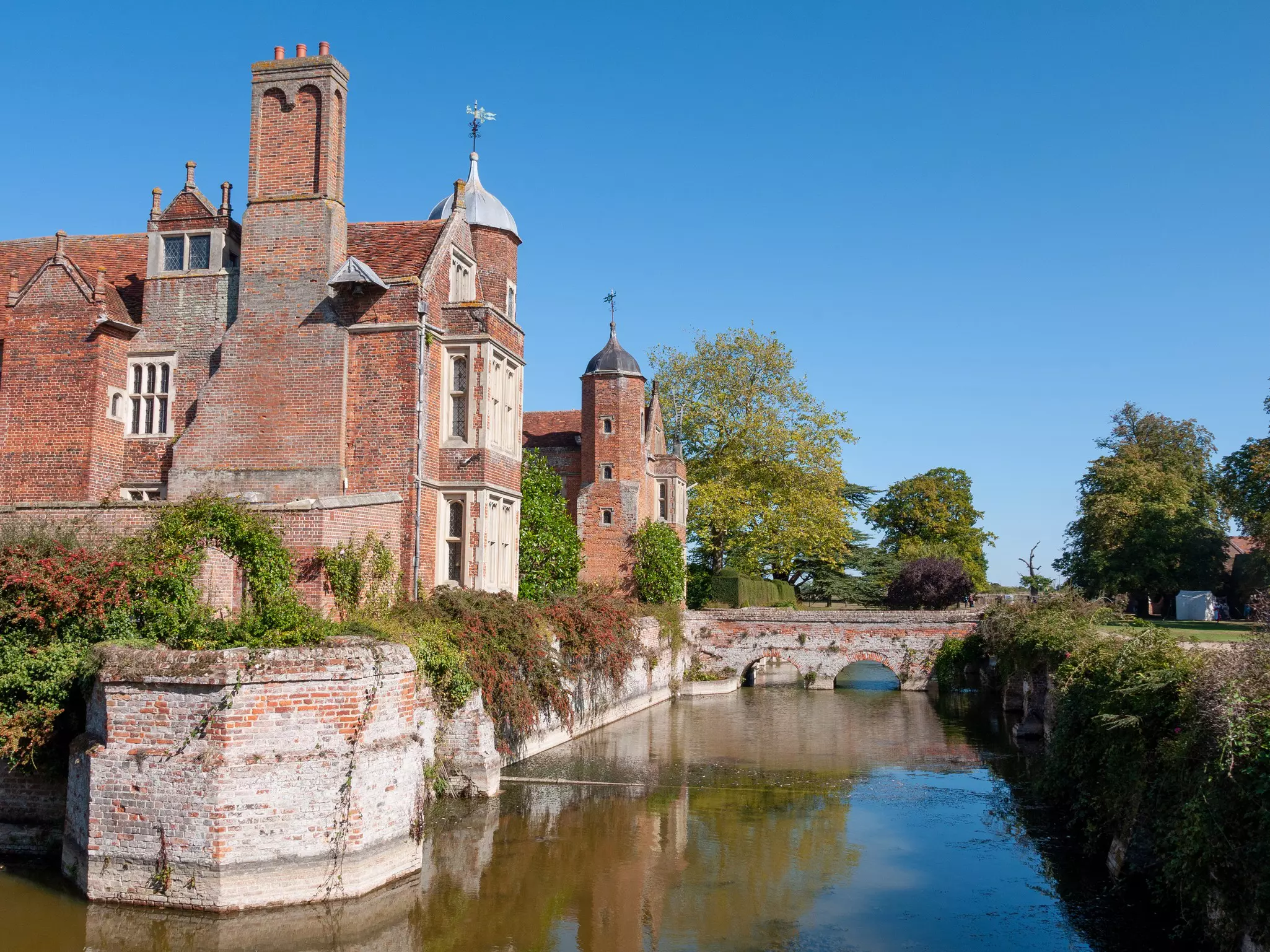
Layer Marney Tower, in nearby Essex, houses England's tallest Tudor gatehouse, while Oxburgh Hall is a moated medieval manor house in Norfolk built by the Bedingfeld family in 1482.
Planning tip: Visit Kentwell Hall during Tudor Midsummer (June 20-21/27-28) to experience everyday life in Tudor Suffolk, or Lavenham in May to enjoy a Tudor fete. A large group can book a Tudor experience, complete with clothing, food and drink, at Milden Hall.
Where Tudor style meets landscape
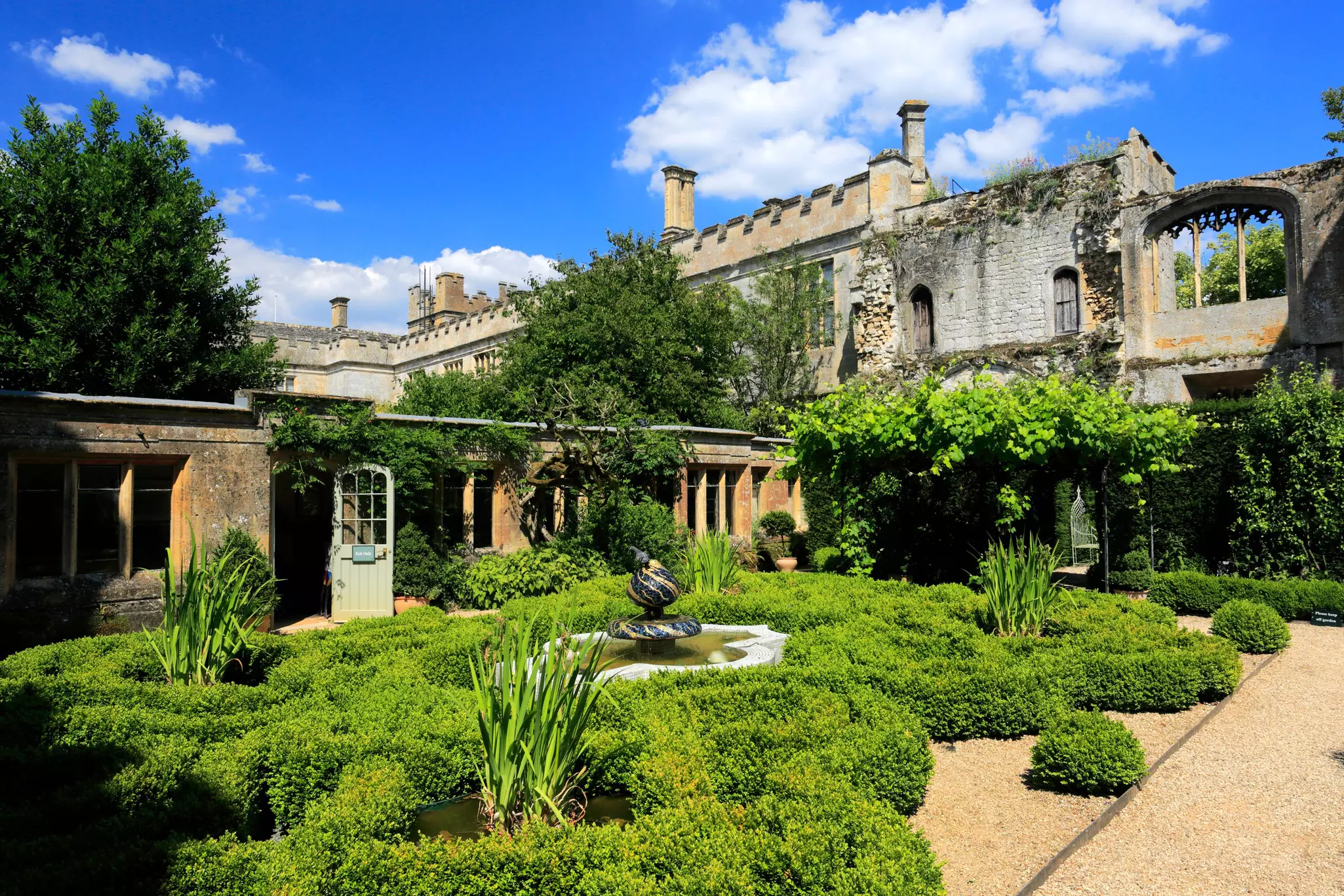
In the Cotswolds, golden limestone replaces brick in Tudor structures, but timber remains a constant. Winchcombe, 8 miles northeast of Cheltenham, houses the standout: Sudeley Castle, the only private castle in England where a queen lies buried in the grounds (Katherine Parr, the last of Henry VIII’s six wives).
Explore the small 15th-century St Mary’s Church where she lies entombed, and wander through a few of the 10 award-winning gardens on the 1200-acre estate. The Queens Garden, for instance, is named for four royal women, Anne Boleyn, Katherine Parr, Lady Jane Grey and Elizabeth I, queens associated with the castle through the Tudor age. Don’t miss the Six Wives Exhibition in the 15th-century West Wing to take a look at replica Tudor costumes from TV series The Six Wives of Henry VIII, and look out for copies of books written by Katherine, the first queen to have her work published.
About 35 miles away to the south is Newark Park, a former Tudor hunting lodge and hidden gem, built by Sir Nicholas Poyntz around 1550.
Where the Tudor era looks forward
No Tudor journey feels complete without Hardwick Hall. Built at the very end of the period, in the late 1500s, by the formidable Bess of Hardwick, this house famously boasts “more glass than wall”, a radical (and expensive) statement in its time. Preserved by the Devonshire family and later passed to the National Trust, it houses original interiors, tapestries and textiles. Nearby, on the site of Bess’s birthplace, stand the atmospheric ruins of Hardwick Old Hall. Set within expansive parkland, the estate offers gardens, walking trails, and sweeping countryside views.
{
  "url": "best-places-for-tudor-architecture-england",
  "destination": "England",
  "title": "england",
  "country": "England",
  "region": "Western-Europe",
  "continent": "Europe",
  "refresh": 30,
  "refresh_limit": 3
} Other stately homes connected to Bess include the grand Chatsworth House, which she built with her second husband Sir William Cavendish; and Bolsover Castle, which she built with her final husband George Talbot and now better known as the 17th-century "playboy's mansion."
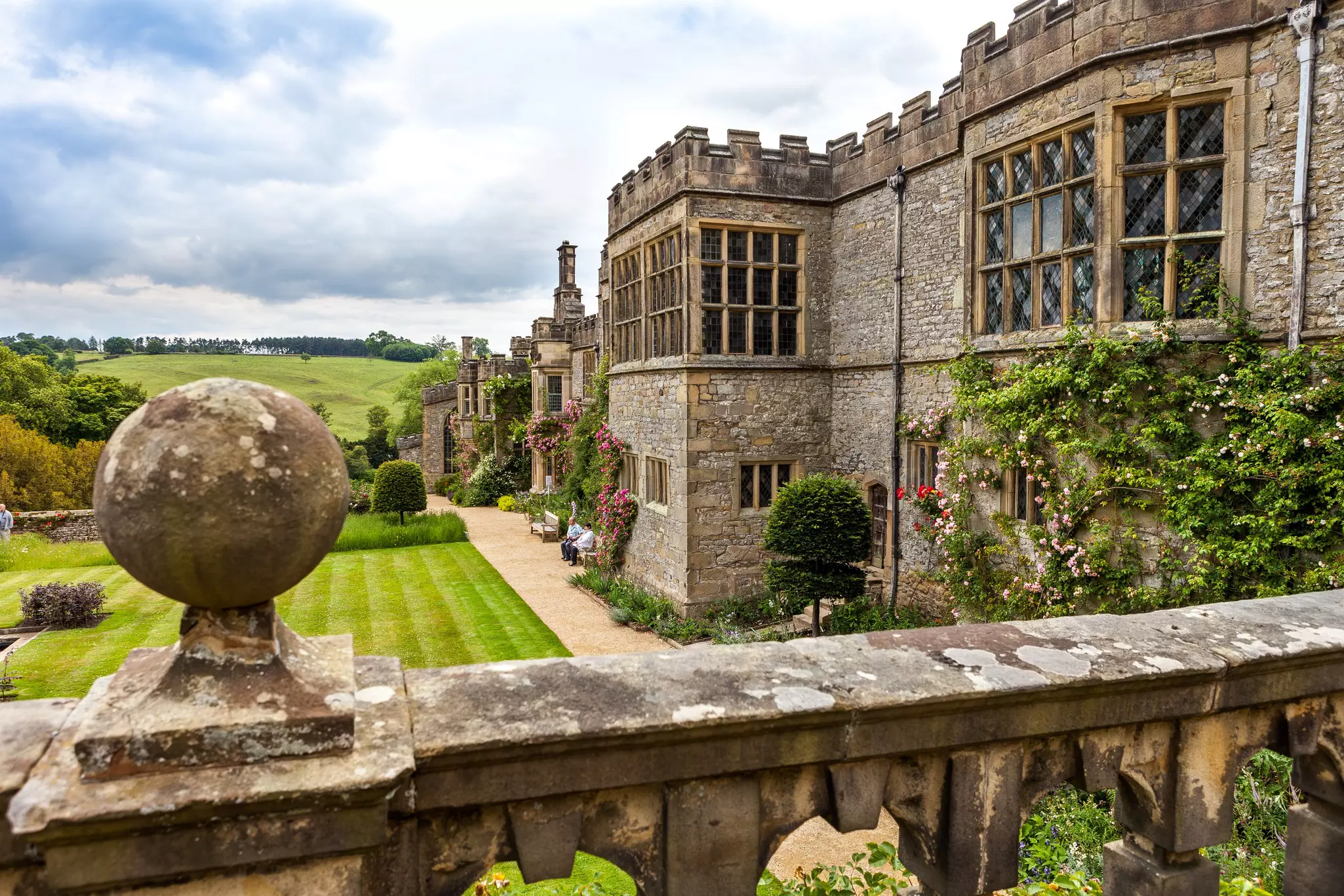
At Haddon Hall, near Bakewell, the parlor showcases a stunning painted ceiling with Tudor roses. The stately home was the filming location of Pride and Prejudice (2005), Elizabeth (1998), The Other Boleyn Girl (2008), and three versions of Jane Eyre.
Best for Tudor craftsmanship and ambition
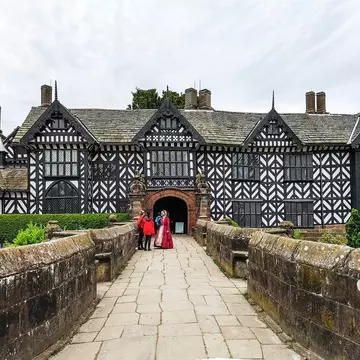
In North England, Tudor architecture feels less like royal display and more lived-in and layered. At Speke Hall, Liverpool, a rare timber-framed manor set near the Mersey River, centuries of history come alive in carved wood, priest holes (where Catholic clergy hid from Protestant persecution) and patterned facades.
Further inland, Bramall Hall pairs its striking black-and-white exterior with richly preserved interiors: a grand hall, 16th-century wall paintings, Elizabethan plaster ceiling and Victorian kitchens.
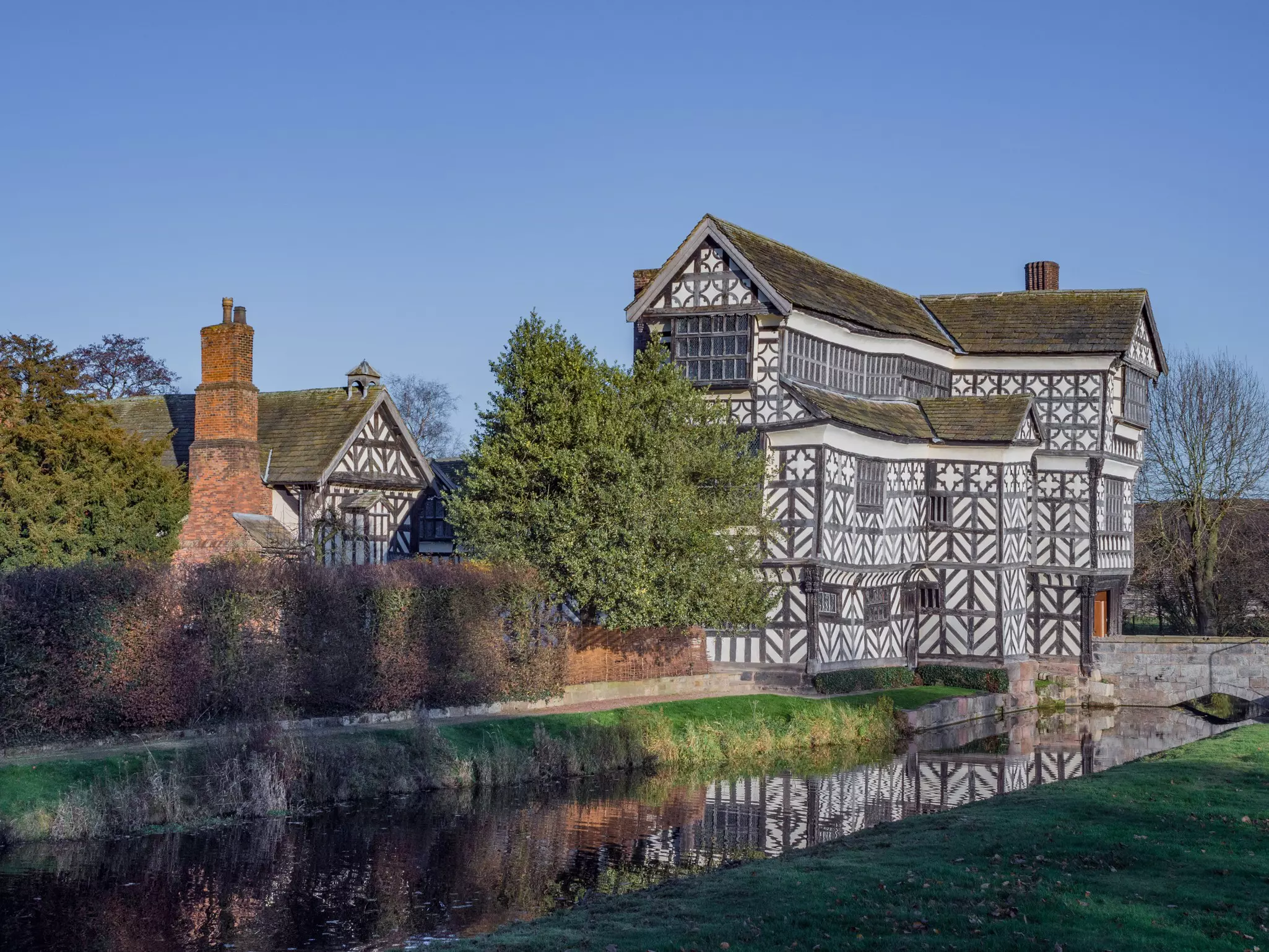
Little Moreton Hall in Cheshire is perhaps the most whimsical of them all: a delightfully crooked timber house whose warped lines and intricate patterns speak to Tudor craftsmanship and ambition. The Elizabeth-style knot garden is surrounded by vegetables and herbs the Tudors would have used for cooking and medicines.
North England’s finest Tudor survivors are in Cheshire and Lancashire, but cities like York showcase glimpses through restored buildings such as Barley Hall, revealing how Tudor life once played out in urban settings.
This isn’t a linear route. Pick a region (or two) and explore at your own pace rather than trying to cover everything in one trip. Here are some other planning tips.
Allow 3–4 days per region for a relaxed long weekend; set aside 10–14 days if you want to combine multiple stops into a broader journey.
Late spring (May to June) and early autumn (September) offer mild weather, fewer crowds, and gardens at their best.
Start in London, then rent a car to explore into Kent and beyond. Many of the most rewarding Tudor sites are in rural areas with limited public transport.
Reserve tickets for Hampton Court Palace, especially in summer, and secure accommodations early in smaller towns and villages.
{
  "url": "best-places-for-tudor-architecture-england",
  "destination": "England",
  "title": "england",
  "country": "England",
  "region": "Western-Europe",
  "continent": "Europe",
  "refresh": 30,
  "refresh_limit": 3
} Take your England trip with Lonely Planet Journeys
Time to book that trip to England
Lonely Planet Journeys takes you there with fully customizable trips to top destinations – all crafted by our local experts.


Explore related stories