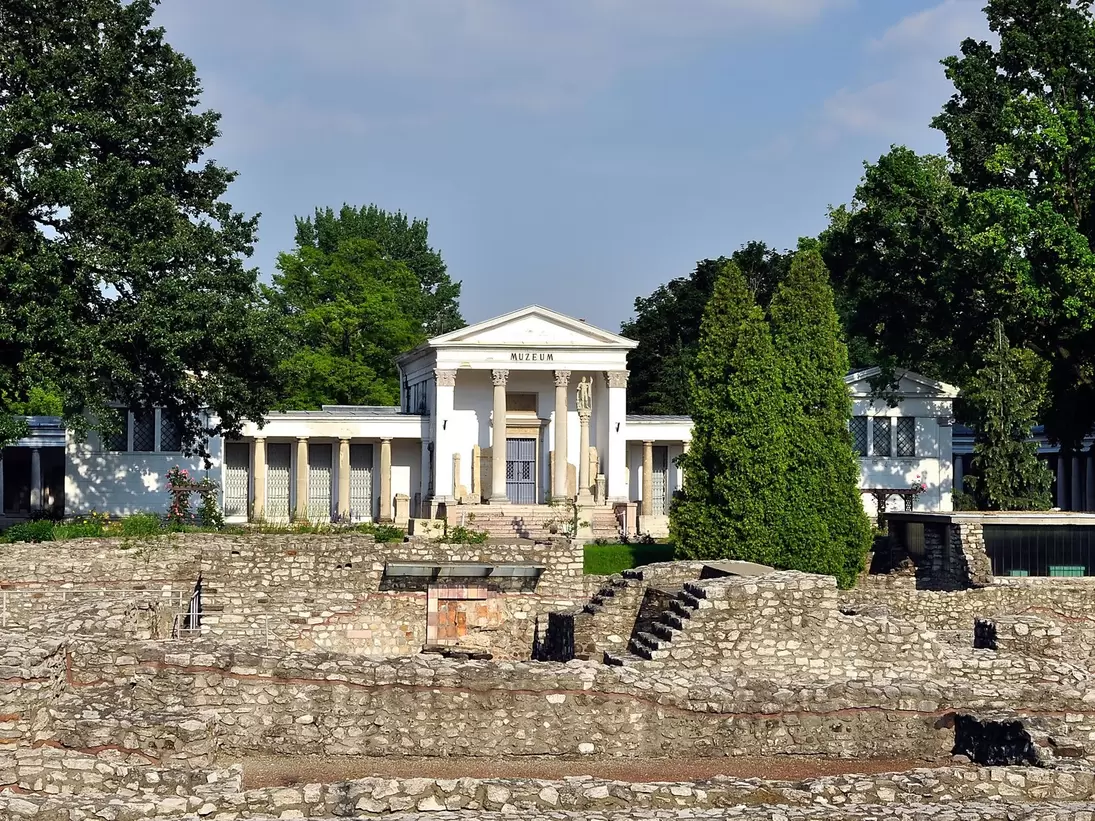
The most complete Roman civilian town in Hungary was built around 100 AD and became the seat of the Roman province of Pannonia Inferior six years later. Visitors can explore the remains of its houses, baths, courtyards, fountains and sophisticated underfloor heating systems, as well as a recreation of a Roman painter's dwelling and a temple dedicated to the god Mithra. The new, purpose-built Aquincum Museum, just inside the entrance on Záhony utca, puts the ruins in perspective, with a vast collection of Roman objects from daily life and wall paintings.
At the museum, look out for the replica of a 3rd-century portable organ called a hydra and the mock-up of a Roman bath. Most of the big sculptures and stone sarcophagi are outside in the park. If you visit the site towards the end of May, dress in a toga for the Floralia Roman festival.