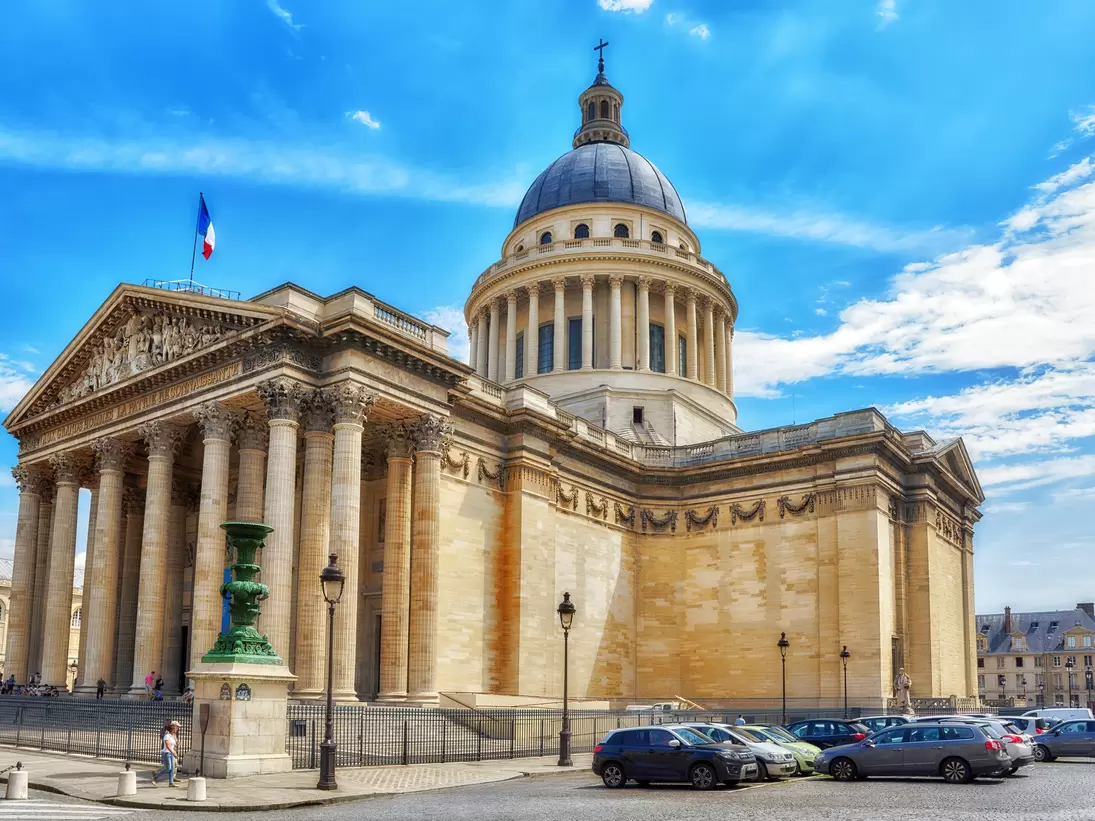
The Panthéon, a neoclassical marvel, once held the title of Paris’ tallest building. Today, it remains a prominent feature of the skyline, offering stunning city views from its dome, accessible by 203 steps. Inside, it honors France’s greatest thinkers, with a pediment depicting key figures of the Nation and Liberty, making it a symbol of intellectual and national pride.
Know the Backstory
Commissioned by King Louis XV around 1750 as an abbey dedicated to Ste Geneviève, Paris’ patron saint, in gratitude for his recovery from illness. It wasn’t until 1790, a year after the French Revolution, that it opened, when it played a secular role as the temple of the nation and mausoleum for the remains of key figures. It did, however, revert back to religious purposes several times.
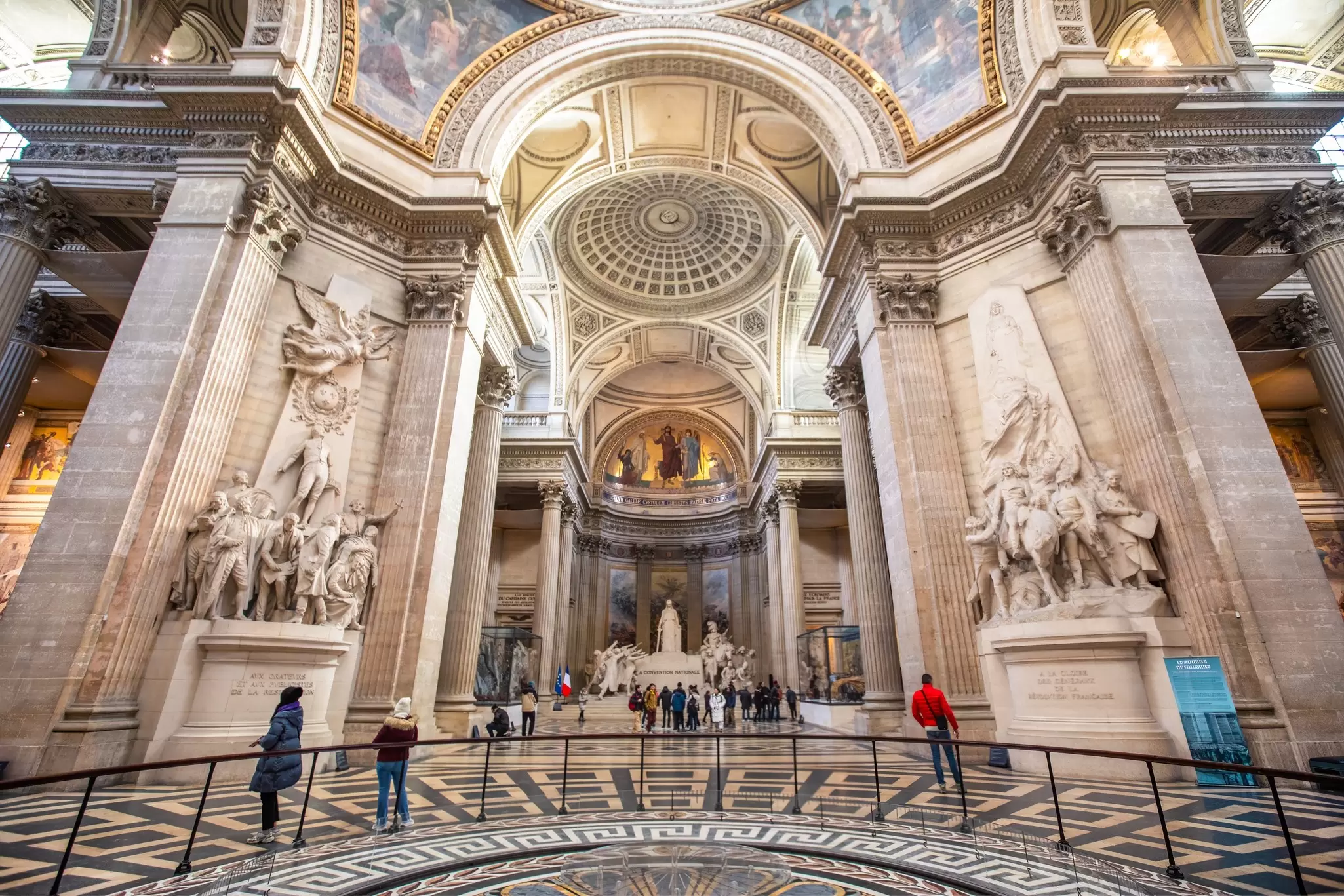
Where France’s Greatest Thinkers Rest
Two-time Nobel Prize–winner Marie Curie was the first woman to be interred based on achievement. In 2018, Auschwitz survivor, feminist icon and human-rights activist Simone Veil became the fifth woman to be interred. Other notable figures include Victor Hugo and Voltaire.

Foucault’s Pendulum
Taking pride of place at the very heart of the Panthéon, Foucault’s Pendulum is named after French physicist Léon Foucault. In 1851 he demonstrated the rotation of the Earth using laboratory apparatus rather than astronomical observations for the first time, by suspending the revolutionary device from the Panthéon’s ceiling. The original pendulum is now housed at the Musée des Arts et Métiers, while a working copy has been displayed at the Panthéon since 1995.