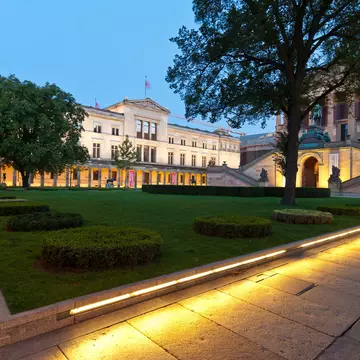
Charlottenburg Palace is the best place in Berlin to soak up the grandeur of the Hohenzollern clan that ruled Brandenburg and later Prussia from 1415 to 1918. Originally a petite summer retreat, it grew into an exquisite baroque pile with opulent private apartments, richly decorated banquet halls, collections of precious porcelain and paintings by French 18th-century masters. It's especially lovely in fine weather, when you can fold a stroll in the palace park into a day of peeking at royal treasures.
The palace's oldest section, the Altes Schloss, is an extravaganza in stucco, brocade and overall opulence. Highlights include: the Oak Gallery, a wood-paneled festival hall draped in family portraits; the lovely Oval Hall, with views of the gardens; Friedrich I’s bedchamber, with the first-ever bathroom in a baroque palace; and the fabulous Porcelain Chamber, smothered top to bottom in Chinese and Japanese blue ware.
Charlottenburg's most beautiful rooms are in the Neuer Flügel, built from 1746 under Frederick the Great by the period's star architect Georg Wenzeslaus von Knobelsdorff. Standouts include the confection-like White Hall banquet room, the mirrored and gilded Golden Gallery and the paintings by Watteau, Pesne and other 18th-century French masters. Upstairs 16 rooms zero in on different facets of the king's personality and life at court. The lavishness of the latter is also exemplified by a new presentation of the Silver Vault which showcases the Hohenzollerns' tableware made of gold, silver, glass and porcelain.
Frederick the Great's nephew and successor used the New Wing as a summer residence and added Chinese and Etruscan design elements. His wife Luise camped out in the more somber Winter Chambers, where a bedroom designed for her by Schinkel is a standout.
The adjacent Schinkel-designed Neuer Pavillon served as a summer retreat for Friedrich Wilhelm III and now houses paintings from the Romantic and Biedermeier periods.
A stroll around the sprawling palace park, with its shady walkways, flower beds and manicured lawns, is a must; you’ll stumble upon the pint-size palace called Belvedere, now an elegant setting for porcelain masterpieces by the royal manufacturer KPM.
Across the carp pond awaits the 1810 neoclassical Mausoleum, where various royals, including Kaiser Wilhelm I and his wife, are entombed in ornate marble sarcophagi.
Each building charges separate admission; it’s best to invest in the "Charlottenburg+" day pass for access to everything. The place gets busy, so come early on weekends and in summer.